

ᎡᏩᎯ ᎭᏫᏂ ᏂᏓᏳᎶᏒ ᏄᏯ
Mantle Rock
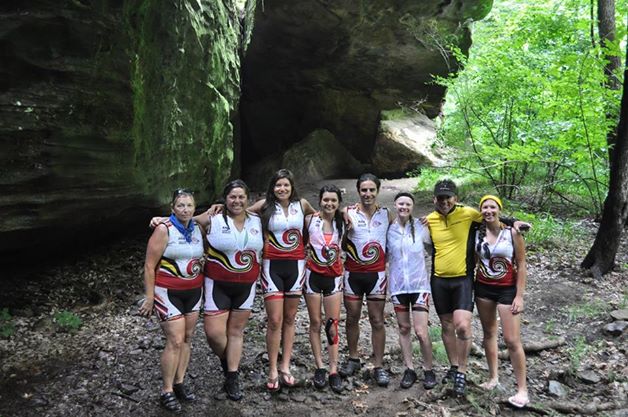 Claimed by Cherokees as hunting grounds from earliest times, this area was utilized more by Chickasaws and Shawnees. No Cherokees lived here, but Mantle Rock did play a part in the infamous “Trail of Tears”. Severe winter weather caused icy conditions on the Ohio River by December 26, 1838. According to Reverend Daniel S. Butrick, a Presbyterian missionary traveling with the Taylor detachment, Peter Hildebrand’s contingent of 1766 had to camp on the Kentucky side of the Ohio River in the Mantle Rock area for about 20 days until all had crossed the river by January 14, 1839.
The large, limestone rock mantle provided a little protection for this group, which probably stretched from 3 to 5 miles in length. The crossing of Peter Hildebrand and his people marked the last of the overland detachments on the Trail of Tears. Of the 13 Ross detachments, 11 came this route.
Updated March 14, 2026